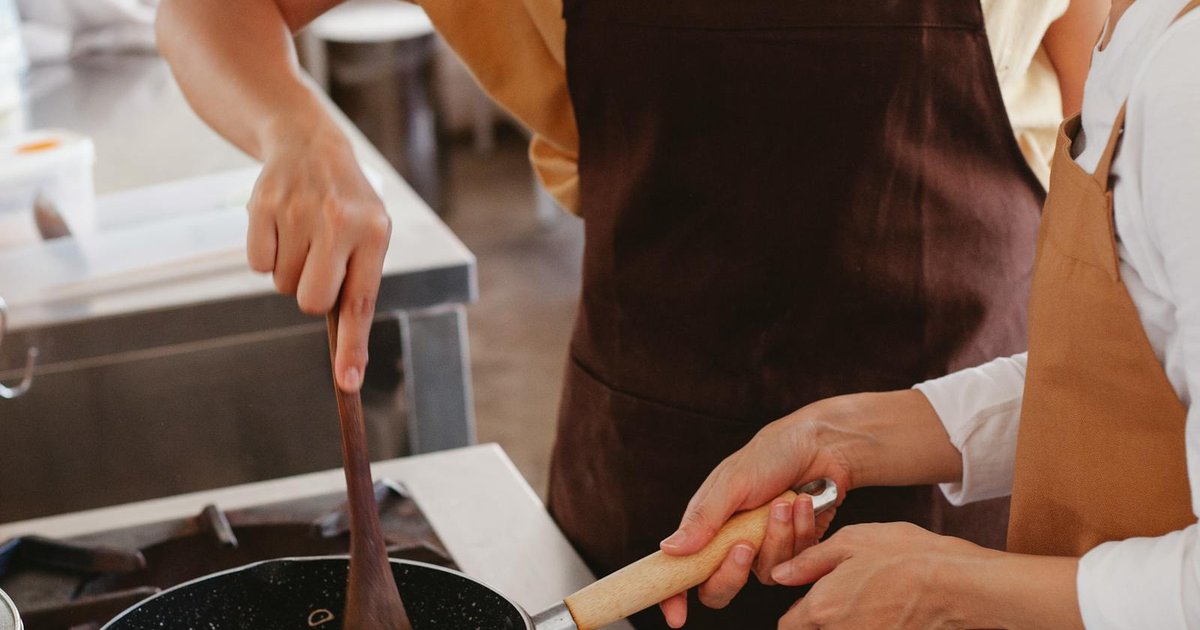
A cooking class is only half the learning. The other half is the evening afterwards, when you try the recipe in your own kitchen while it is still fresh — with ingredients you know are good because you have been to the right market.
The apartment has a fully-equipped kitchen. The Corfu Town Covered Market is a two-minute walk from the door. The Saturday morning producers' market at the Old Fortress entrance is a five-minute walk. For a Corfu Town guest interested in food, this is the one setup that makes a cooking class a proper investment rather than an afternoon amusement.
Why Corfiot Cooking Rewards Learning
Most Greek island cuisines converge. Corfu's does not. Four centuries of Venetian rule left the island with a vocabulary of dishes — pastitsada (a cinnamon-scented ragù), sofrito (garlic-wine veal), bourdeto (paprika fish stew), pastrokio (baked pasta with tomato) — that you do not meet anywhere else in the country. A class unlocks them; a kitchen afterwards lets you keep them.
What to Look for in a Class
The Farm Experience
A working olive estate inland from Corfu Town, usually 25–45 minutes' drive. A morning in the groves, an olive-oil tasting, then a class in the family kitchen. Five hours door to door. €80–140 per person.
The Home-Kitchen Class
A smaller, more intimate class in a village house with a local cook. Six people maximum, the cook is usually a grandmother, the recipes are what she makes for her family. €50–90 per person.
The Restaurant Kitchen Workshop
A working kitchen that opens for classes in off-hours, usually afternoon. Technique-focused; suits guests who already cook and want specific skills. €70–110 per person.
Dishes to Come Back With
The Three Corfiot Essentials
Pastitsada. The dish. Rooster or beef with tomato, cinnamon, cloves, bay, slow-simmered three hours, served over thick bucatini. The home version is unrecognisable from a hurried taverna plate.
Sofrito. Veal in a white-wine, garlic and parsley sauce. Faster than pastitsada, more delicate, Venetian at its root.
Bourdeto. Paprika and tomato fish stew, hot with red pepper. Made by the fishermen of southern Corfu for generations.
Meze for Any Evening
Tzatziki — the real version starts the night before, straining yogurt. The apartment's fridge handles this easily.
Melitzanosalata — grill the aubergine over an open flame until black.
Dolmades — slow rolling work, but once you've made them, you've made them.
The Corfu Town Extras
Sykomaida — fig-and-wine rolls; a Christmas speciality that is often on class menus in autumn.
Mandolato — honey-almond nougat. Takes practice but is one of the island's food signatures.
Loukoumades — small honey doughnuts. The oil temperature is the skill.
The Apartment Kitchen Advantage
Our setup
Gas hob, proper pans, a good large pot for pastitsada. A two-minute walk to the Corfu Town Covered Market (open 7am–2pm daily). A five-minute walk to the Saturday farmers' market. A ten-minute walk to the port fish stalls. For anyone who wants to try what they've learnt the very next day, this is the easiest base on the island.
Our Suggested Two-Day Plan
Day one: Take the class in the morning (we'll help pick the right one). Eat the shared meal. Come home with a recipe card, a bottle of the farm's olive oil, and a few key ingredients.
Day two morning: Visit the Corfu Town Covered Market to buy what you need — meat for a small pastitsada, yogurt for strained tzatziki, aubergine for melitzanosalata. The vendors are happy to explain cuts and help with choices.
Day two afternoon: Prep and slow-cook. Open a bottle of Corfu white. Invite your travel partner to a dinner that proves you learnt something.
The Markets Close to the Apartment
Covered Market, Desilla Street — 2 min walk
Open 7am–2pm every day except Sunday. Fish, vegetables, cheese, spices, fresh herbs. Best before 11am when everything is freshest and least picked-over.
Saturday Market, Old Fortress — 5 min walk
Saturday mornings, 7am–1pm. Farmers from across the island come in with seasonal vegetables, wild greens, eggs, honey and cheese. The class teachers often shop here themselves.
For Families
Children from 8–9 upwards usually do well in a Corfiot class — rolling dolmades and frying loukoumades are age-friendly and rewarding. Ask the operator whether they take children and whether they'll adjust the menu (less chilli in the bourdeto, for instance).
Getting There
Most classes are in countryside farms or village houses. From Corfu Town, 25–45 minutes by car depending on the location. Transfers offered by operators tend to be expensive.
Herbie Cars
Our rental partner delivers the car to the apartment door. Useful for the cooking class, and for the beach days that follow.
Book a CarIf You Want to Extend to a Beach Kitchen
After a week cooking in town, some guests fancy a second leg at the beach with a bigger kitchen. Our friends at Corfu Beach and Town keep a few properties that work for this — large kitchens, gardens for outdoor dining, and easy access to east-coast markets.
Corfu Beach and Town
Beach houses across the island — good for a second leg of a culinary holiday, with kitchens suited to entertaining.
View PropertiesFurther Reading
Before you go, read our Corfiot dishes overview so you know what you're ordering. The olive oil tasting guide covers the most important ingredient in every class. And for evenings when you'd rather eat out than cook, see the traditional restaurants guide.